
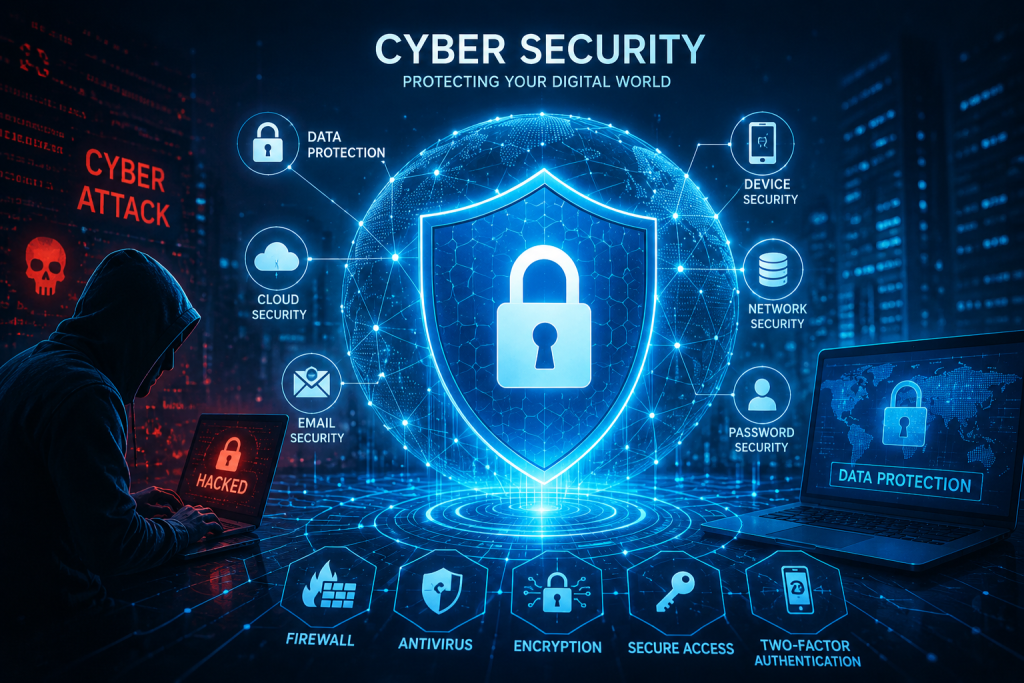
In today’s hyper-connected world, cyber security is no longer optional—it is a necessity. From personal smartphones to large enterprise systems, every digital device is a potential target for cyber threats. As technology grows, so do the risks.
What is Cyber Security?
Cyber security refers to the practice of protecting computers, networks, servers, mobile devices, and data from malicious attacks, unauthorized access, or damage. It involves a combination of technologies, processes, and user awareness to ensure digital safety.
Why Cyber Security is Important
Every day, millions of cyber attacks occur worldwide. These attacks can lead to:
- Data theft (personal or business information)
- Financial loss through fraud or hacking
- Identity theft
- Website or system downtime
- Loss of customer trust for businesses
Whether you are an individual user or a business owner, cyber security helps protect your digital identity and assets.
Common Types of Cyber Threats
1. Phishing Attacks
Fake emails or messages designed to trick users into revealing sensitive information like passwords or bank details.
2. Malware
Malicious software such as viruses, ransomware, or spyware that damages or steals data.
3. Ransomware
A type of malware that locks your files and demands payment to restore access.
4. Hacking
Unauthorized access to systems or accounts for stealing or manipulating data.
5. Social Engineering
Manipulating people into giving away confidential information.
Best Practices for Cyber Security
To stay safe online, follow these essential practices:
- Use strong and unique passwords
- Enable two-factor authentication (2FA)
- Keep software and systems updated
- Avoid clicking unknown links or attachments
- Use antivirus and firewall protection
- Regularly backup important data
Cyber Security for Businesses
For companies, cyber security is even more critical. A single breach can lead to massive financial and reputational damage. Businesses should invest in:
- Secure servers and encrypted systems
- Employee cyber awareness training
- Regular security audits
- Advanced threat detection tools
Future of Cyber Security
With the rise of AI, IoT, and cloud computing, cyber security is evolving rapidly. Future systems will rely more on:
- Artificial Intelligence-based threat detection
- Automated security systems
- Zero-trust architecture
- Biometric authentication
Conclusion
Cyber security is the backbone of the digital world. As threats continue to grow, staying informed and protected is the only way forward. Whether you are browsing the internet casually or managing a business, security should always be your top priority.