
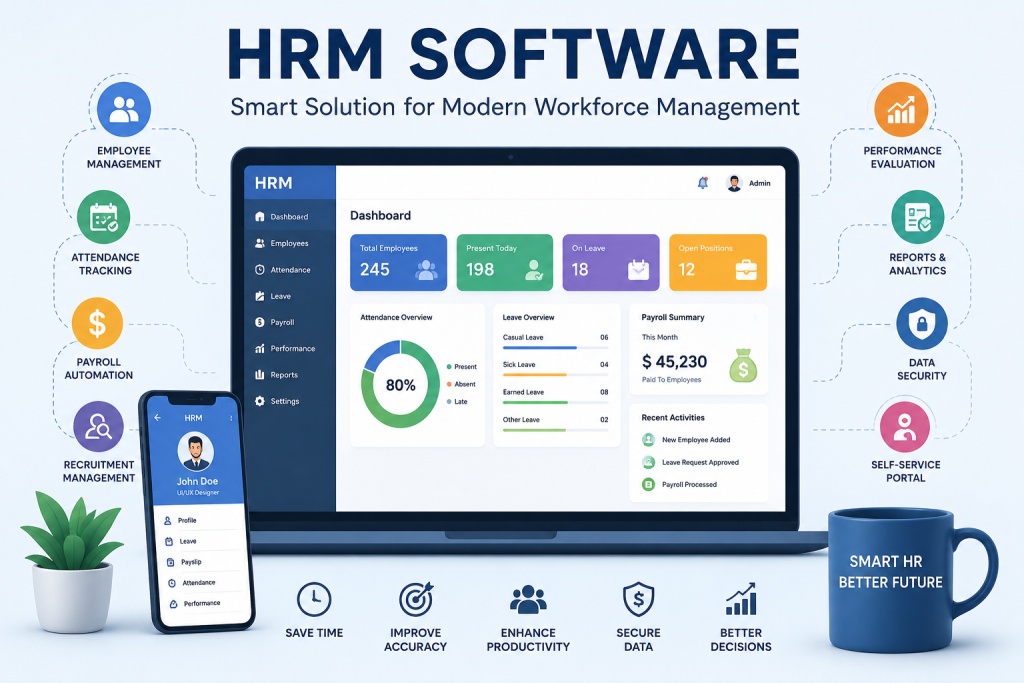
In today’s fast-moving business world, managing employees manually is no longer efficient. From attendance tracking to payroll management, businesses need a smarter and faster solution. This is where HRM Software becomes essential.
Human Resource Management (HRM) Software helps companies automate HR operations, improve employee management, and increase overall productivity. Whether you run a startup, a medium-sized company, or a large enterprise, HRM software can simplify your daily workflow and save valuable time.
What is HRM Software?
HRM Software is a digital solution designed to manage various human resource activities in one centralized platform. It helps HR teams handle employee records, payroll, attendance, recruitment, leave management, performance evaluation, and more.
Instead of using spreadsheets and paperwork, companies can manage everything through an organized and secure system.
Key Features of HRM Software
1. Employee Management
HRM software stores employee information such as contact details, job positions, salaries, documents, and work history in one place.
2. Attendance & Leave Tracking
Employees can check in/out digitally, while HR managers can monitor attendance, late entries, and leave requests easily.
3. Payroll Automation
Salary calculations, bonuses, deductions, taxes, and payslip generation become automated, reducing errors and saving time.
4. Recruitment Management
HR teams can post job openings, track applicants, schedule interviews, and manage hiring processes efficiently.
5. Performance Evaluation
Managers can track employee performance, assign goals, and generate performance reports for better decision-making.
6. Reporting & Analytics
HRM software provides valuable insights through reports and analytics that help companies improve workforce planning.
Benefits of Using HRM Software
Saves Time
Automation reduces repetitive manual tasks and allows HR teams to focus on strategic activities.
Improves Accuracy
Automated systems minimize payroll mistakes, attendance errors, and data duplication.
Enhances Employee Experience
Employees can access their information, apply for leave, and download payslips through self-service portals.
Increases Productivity
A streamlined HR process improves workflow efficiency and team productivity.
Better Data Security
Employee information is stored securely with role-based access and cloud backups.
Who Needs HRM Software?
HRM software is suitable for:
- Small Businesses
- Corporate Offices
- E-commerce Companies
- Educational Institutions
- Healthcare Organizations
- Manufacturing Industries
- Remote Teams & Startups
Cloud-Based vs On-Premise HRM Software
Cloud-Based HRM
- Accessible from anywhere
- Lower setup cost
- Automatic updates
- Ideal for remote teams
On-Premise HRM
- Installed on company servers
- More control over data
- Suitable for large enterprises with internal IT teams
How to Choose the Best HRM Software
Before selecting HRM software, consider:
- Company size
- Budget
- Required features
- Ease of use
- Mobile accessibility
- Customer support
- Integration options
- Security features
Choosing the right HRM system can significantly improve your business operations and employee satisfaction.
Final Thoughts
HRM Software is no longer a luxury — it’s a necessity for modern businesses. It helps companies manage employees efficiently, reduce administrative workload, and improve overall organizational performance.
As businesses continue to grow digitally, investing in reliable HRM software can provide long-term benefits and create a more productive work environment.